

East Asia
Japan
Neon cities, ancient temples and bullet trains — the perfect first trip to Asia.
- Tokyo
- Kyoto temples
- Mt. Fuji & Hakone
- Bullet trains
- Nara deer park
- Osaka street food
Japan packs hyper-modern cities, centuries-old shrines, world-class food and an unmatched rail network into one remarkably easy country to travel. These routes follow the classic "Golden Route" (Tokyo–Kyoto–Osaka) and expand outward as you add days, so you can pick the length that fits your trip.
Build your trip
Tune it to you, then export it.
Length
Travel style
Your interests
The essential first-timer loop: Tokyo, a Mt. Fuji day trip, and the temples of Kyoto and Nara.
Daily budget:≈ €100–180 / day
Comfortable 3★ hotels or business hotels, restaurant meals, the odd Shinkansen leg and the occasional paid attraction.
Day by day
- 1

Shinjuku's skyline once the sun goes down.© shuets / canvasy from Tokyo, Japan · CC BY-SA 2.0 
Omoide Yokocho: tiny bars and yakitori smoke.© MaedaAkihiko · CC BY-SA 4.0 
Kabukichō neon — Tokyo straight out of a film.© Basile Morin · CC BY-SA 4.0 Straight out of the airport, grab a rechargeable IC card and pocket Wi-Fi (or a travel eSIM) and hop on the train into town. Trust me on this: don't try to see everything today — jet lag is real and Tokyo isn't going anywhere. Drop the bags, step outside, and let the neighbourhood light up around you.
Your first night in Tokyo almost never goes to plan, and that's exactly the charm of it: you wander by accident into an alley of six-stool bars, a train roars by overhead, a vending machine lights up an empty street… and it hits you that this giant city can be weirdly quiet too. Don't fight the tiredness — just let it carry you.
Our take
My take: don't book anything demanding for tonight. A relaxed first dinner at a neighbourhood izakaya, a cold beer, an early night — tomorrow-you will say thanks.
Highlights
- ✦ Shinjuku or Shibuya at night
- ✦ First izakaya dinner
💡 Tip: The Narita/Haneda airport trains and limousine buses are the easiest way into the city.
- 2

The giant lantern of Kaminarimon, the gateway to Senso-ji.© Tak1701d · CC BY-SA 3.0 
Nakamise street, stalls all the way to the temple.© Asturio Cantabrio · CC BY-SA 4.0 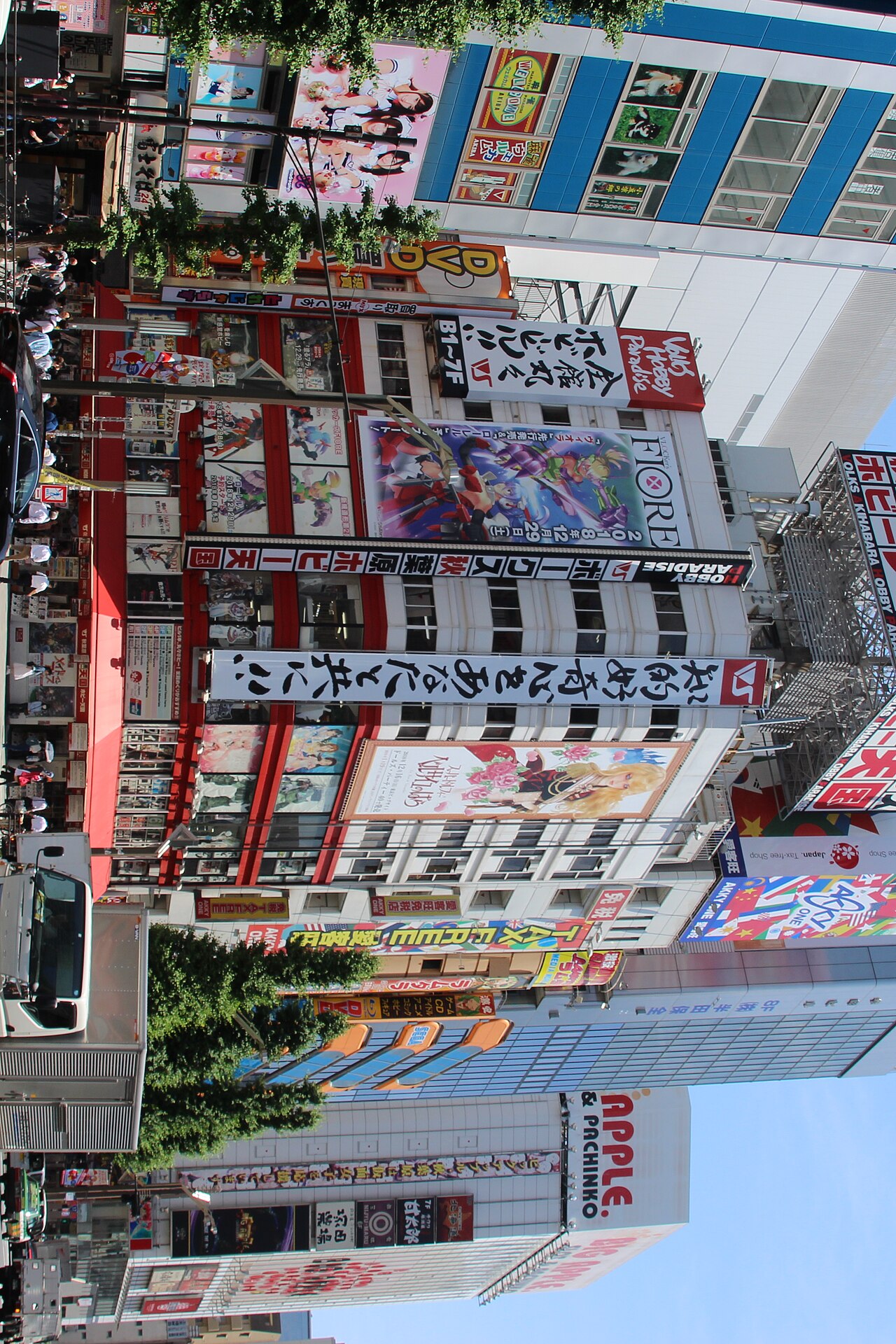
Akihabara: signs, arcades and glorious geekery.© Hyppolyte de Saint-Rambert · CC BY-SA 4.0 Start the day on the east side at Senso-ji, Tokyo's oldest temple. You enter through the mighty Kaminarimon gate and its car-sized red lantern, reaching the temple along Nakamise street, packed with sweet stalls and souvenirs. Get lost afterwards in the lanes of old Asakusa, cross to Ueno Park (museums, and cherry blossoms in spring) and end as the light fades in Akihabara — a wonderful chaos of electronics, arcades and anime.
Asakusa carries its history so casually it's infectious. Through the incense smoke — which people fan toward their faces for luck — you spot a rickshaw puller in tabi boots, a craftsman hammering away at a knife stall, the five-storey pagoda catching the afternoon light. Then you hop on the metro, pop up in Akihabara, and it's like switching planets: loud, bright and gloriously nerdy.
Our take
One detail that makes or breaks the day: hit Senso-ji early (before 8am) and you'll have it almost to yourself; by mid-morning it's shoulder-to-shoulder. And dodge the restaurants right by the temple — eat a couple of streets back and you'll eat better and cheaper.
Highlights
- ✦ Senso-ji & Nakamise street
- ✦ Ueno Park & museums
- ✦ Akihabara electronics & anime
- 3

The Shibuya scramble mid-surge.© Benh LIEU SONG ( Flickr ) · CC BY-SA 2.0 
Meiji Jingu's great wooden torii, deep in the trees.© Mustang Joe · CC0 
Harajuku's Takeshita Street: crêpes, colour and fashion.© Syced · CC0 Plant yourself at the Shibuya crossing and watch a thousand people cross at once without colliding (a small daily miracle). A few minutes away, Meiji Jingu shrine greets you with forested calm — a contrast that feels almost unreal. Browse the boutiques of Harajuku and Omotesandō, then close the day with a free sunset from the Metropolitan Government Building observatory in Shinjuku.
The Shibuya crossing has its own addictive rhythm: the lights hold, the crowd piles up on every corner, and then everything releases at once — umbrellas, phone screens, shopping bags — flowing in every direction. Twenty minutes later, beneath the huge wooden torii of Meiji Jingu, the city noise just switches off. That contrast, inside half an hour, is Tokyo in its purest form.
Our take
Let me save you some money: skip the paid observation decks. The Metropolitan Government Building's is free with a similar view. For the crossing shot, the Starbucks opposite is the usual cliché; I prefer the angles from the pedestrian bridges.
Highlights
- ✦ Shibuya Crossing
- ✦ Meiji Jingu shrine
- ✦ Harajuku & Omotesando
- 4

Lake Ashi with Fuji behind — on a clear day.© Kentagon · CC BY-SA 4.0 
Owakudani steaming sulphur — home of the black eggs.© Guilhem Vellut from Annecy, France · CC BY 2.0 
The Hakone Shrine torii standing in the water.© Guilhem Vellut from Annecy, France · CC BY 2.0 Escape to the mountains of Hakone (on a day trip, or better, staying overnight). It's a toy-like loop: mountain railway, cable car and a boat across Lake Ashi. On clear days Mt. Fuji floats on the horizon while down below the sulphur vents of Owakudani steam away. And to finish, an onsen (hot-spring bath) that leaves you brand new.
Fuji is famously shy — it spends half the year hidden behind cloud — so the moment it shows up, perfectly symmetrical above the lake, it stops everyone mid-sentence. But even if it stays hidden, Hakone is worth every minute: the slow rattle of the loop, the smell of sulphur, the black eggs boiled in the hot spring… you feel like you're in another country, barely an hour from Tokyo.
Our take
If the budget allows, sleep one night in a ryokan with an onsen. I mean it: it's one of the most relaxing things you'll do on the whole trip. And get the Hakone Free Pass — it usually pays off if you ride the full loop.
Highlights
- ✦ Lake Ashi cruise
- ✦ Owakudani volcanic valley
- ✦ Onsen (hot spring) soak
💡 Tip: Mt. Fuji is often shrouded in cloud; mornings in autumn and winter give the best odds.
- 5

Arashiyama's bamboo grove, best at first light.© Basile Morin · CC BY-SA 4.0 
Gold-leaf Kinkaku-ji mirrored in its pond.© Martin Falbisoner · CC BY-SA 4.0 
Kimonos along Hanamikoji, in the heart of Gion.© GuillemMedina · CC BY-SA 4.0 Getting there: Shinkansen Tokyo → Kyoto (about 2h15m)
Board the Shinkansen in Tokyo and watch the country blur past the window; if you're on the right side and lucky, Fuji flashes by near Shin-Fuji (have your phone ready). In Kyoto, head straight for the towering Arashiyama bamboo grove, the golden Kinkaku-ji mirrored in its pond, and — once night falls — the lantern-lit wooden lanes of Gion.
Stepping off the bullet train in Kyoto, the shift is instant: the pace drops, the buildings shrink, temple roofs start peeking between the houses. At dusk in Gion, if you're quiet and a little lucky, you might hear the quick clatter of wooden geta — a geiko hurrying to an appointment down a street that looks unchanged in a hundred years. Goosebumps.
Our take
Two things. One: Arashiyama's bamboo is magic right at opening and a scrum by 10 — go early and you'll have it almost empty. Two, and it matters: in Gion don't chase or hound the geiko with your camera. Admire from a distance; it's their job and their neighbourhood, not a theme park.
Highlights
- ✦ Arashiyama bamboo grove
- ✦ Kinkaku-ji (Golden Pavilion)
- ✦ Gion geisha district
- 6

The torii tunnels of Fushimi Inari.© Basile Morin · CC BY-SA 4.0 
Nara's deer, expert cracker-beggars.© TR15336300101 · CC BY-SA 4.0 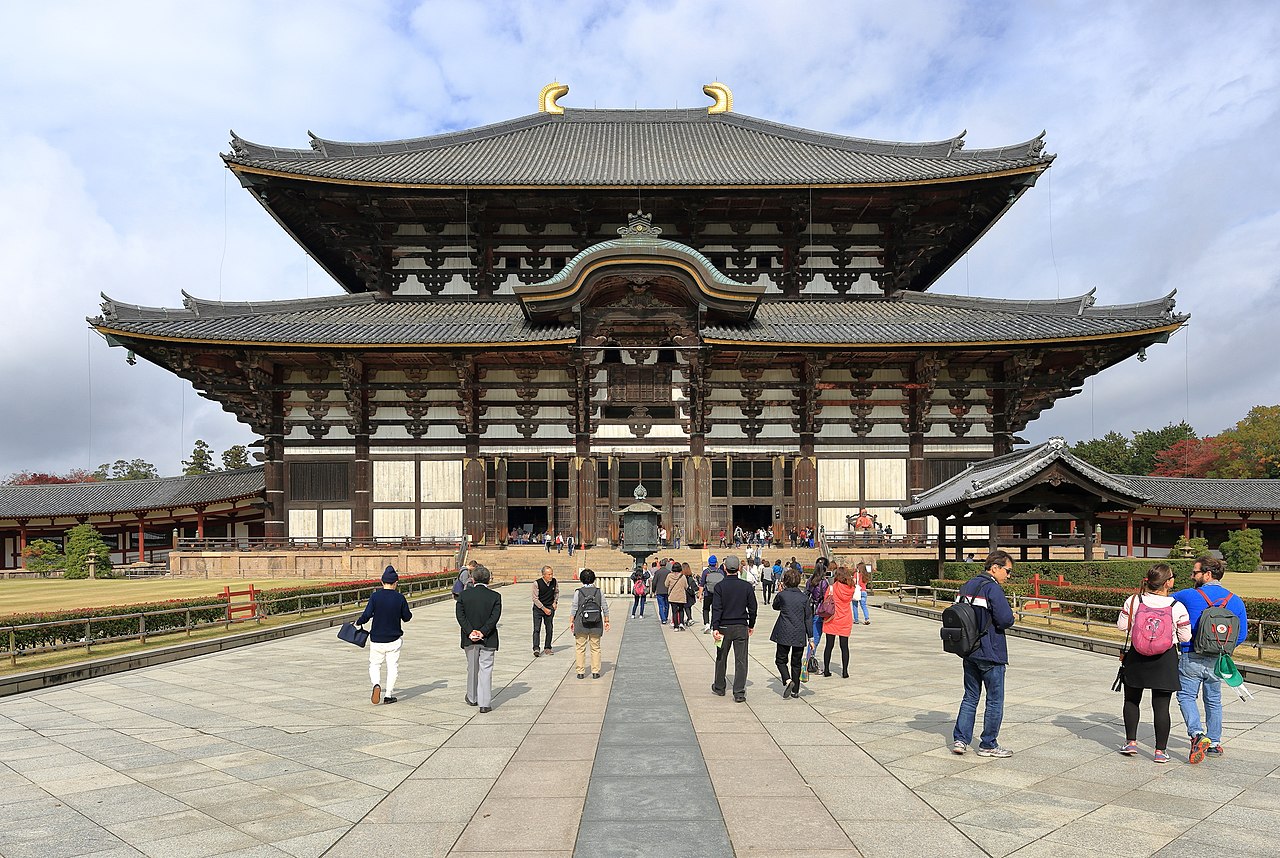
Todai-ji, one of the world's largest wooden buildings.© Martin Falbisoner · CC BY-SA 4.0 Getting there: Train south via Fushimi Inari to Nara (about 1h in total)
Get up early to beat the crowds at Fushimi Inari and climb its tunnels of vermilion torii up the mountain: the higher you go, the quieter and emptier it gets. Then take the train south to Nara, Japan's first permanent capital, where sika deer roam the park freely and the huge wooden hall of Todai-ji guards a 15-metre bronze Buddha that genuinely takes your breath away.
Most people snap the first hundred gates at Fushimi Inari and turn back. You keep climbing: within twenty minutes the selfie sticks vanish and it's just you, the forest, and that rhythmic red of the torii repeating up the slope. In Nara, the deer have learned to bow for a cracker — adorable — until one decides your map is also a snack and tries to nick it from your pocket.
Our take
Make the most of Fushimi Inari being open 24/7 and free: going at sunrise is worth the early alarm, promise. In Nara, buy the crackers (shika senbei) from the official stalls and hand them over quickly; remember they're wild animals, not plushies.
Highlights
- ✦ Fushimi Inari torii gates
- ✦ Nara Park deer
- ✦ Todai-ji Great Buddha
- 7

Heading home… already planning the next trip.© Tobias1984 · CC BY-SA 3.0 
Time to spare? Osaka's Dotonbori neon is worth a detour.© Martin Falbisoner · CC BY-SA 4.0 Getting there: Kansai International Airport (KIX) is well connected to Kyoto, Nara and Osaka
Save the morning for whatever you're already missing: one last temple, one last bowl of ramen, or a souvenir hunt through a depachika (the food floor of a department store — an experience in itself). Then it's off to Kansai International Airport, well connected to Kyoto, Nara and Osaka. Left wanting more? This is exactly where the 15-day route picks up.
Japan has a bad habit of making you plan your return before you've even left. Somewhere over the Pacific you'll already be missing the konbini clerk's bow, the trains' punctual chime, and that very Japanese way a country of 125 million people has of feeling quietly considerate. Don't worry: you always come back to Japan.
Our take
Leave more time than you think to reach the airport: Kansai sits on an artificial island and the train or bus can take 75–90 minutes from Kyoto. Little trick: spend your last yen on terminal snacks — the best plane food there is.
Highlights
- ✦ Last-minute souvenirs
- ✦ Fly home from Kansai (KIX)
Where to stay
The best neighbourhood to base yourself in each area, by budget. We point you to the right zone — then you pick and book the place that fits.
Tokyo
- Backpacker · Asakusa / Ueno
- Classic old-town Tokyo — hostels, cheap eats and great transport.
- Mid-range · Shinjuku / Shibuya
- Central, buzzing and on every train line — the easiest base.
- Comfort · Ginza / Marunouchi
- Upscale hotels by Tokyo Station, steps from shopping and dining.
Hakone
- Backpacker · Hakone-Yumoto
- Cheaper inns by the gateway station, on the loop and easy to reach.
- Mid-range · Gora / Miyanoshita
- Ryokan with private onsen, central to the Hakone sightseeing loop.
- Comfort · Sengokuhara
- Luxury ryokan with open-air baths and, on clear days, Mount Fuji views.
Kyoto
- Backpacker · Around Kyoto Station
- Hostels and capsule hotels with fast access to trains and buses.
- Mid-range · Downtown (Kawaramachi)
- Walkable to Gion, Nishiki market and the river — the best all-round base.
- Comfort · Higashiyama / Arashiyama
- Traditional machiya and ryokan among the temples and bamboo.
Osaka
- Backpacker · Namba / Shinsekai
- Lively, cheap and the heart of Osaka’s street-food scene.
- Mid-range · Namba / Umeda
- Central transit hubs, easy day trips to Kyoto, Nara and Himeji.
- Comfort · Umeda / Kitashinchi
- High-rise hotels above the main station and the smart dining district.
Hiroshima
- Backpacker · Near the Peace Park
- Hostels around Hondori, walking distance to the memorial sights.
- Mid-range · Around Hiroshima Station
- Convenient business hotels for the shinkansen and ferry connections.
- Comfort · Miyajima island
- Stay overnight on the island to enjoy the famous torii after the crowds leave.
Kanazawa
- Backpacker · Near Kanazawa Station
- Modern, affordable hotels by the station, handy for onward trains.
- Mid-range · Korinbo / Katamachi
- Central for shopping, dining and the garden — walkable to everything.
- Comfort · Near Kenroku-en
- Refined hotels and ryokan by the great garden and the geisha district.
We may earn a commission from bookings made through these links, at no extra cost to you.
At a glance
Best time to go
Spring (late March–April) for cherry blossoms and autumn (October–November) for foliage offer the mildest weather. June is the rainy season and September brings typhoons; summer is hot and humid.
Currency
JPY (¥)
Language
Japanese. English signage is common on transport and in tourist areas, but less so elsewhere — a translation app helps.
Visa & entry
Citizens of the EU, UK, US and many other countries can enter visa-free for short tourist stays (commonly up to 90 days). Always confirm current rules for your nationality with an official source before booking.
Daily budget
Mid-range travellers should plan roughly €100–180 per person per day including accommodation, food and local transport. Backpackers can go lower with hostels and convenience-store meals; figures are approximate and vary by season and city.
Getting around
Trains are king. The Shinkansen (bullet train) links major cities; the Japan Rail Pass can pay off for long multi-city routes (compare against individual tickets first). In cities, use a rechargeable IC card (Suica/Pasmo/ICOCA) for metro and buses.
Safety
Japan is one of the safest countries in the world, with very low crime. The main hazards are natural (earthquakes, typhoons) — know your accommodation’s evacuation info.
Connectivity
Rent a pocket Wi-Fi or buy a travel eSIM at the airport for reliable data. Free Wi-Fi exists but is patchy.
What to pack — Japan
Our recommended gear for this trip — country-specific picks first, then the travel essentials we never leave home without.
- 👟Comfortable walking shoes→
- ☂️Compact travel umbrella→
- 👛Coin purse→
- 🔌Universal travel adapter→
- 🧳Packing cubes→
- 🔋Power bank→
- 🎒Packable daypack→
- 💧Filtered water bottle→
- ⛑️Travel first-aid kit→
Amazon affiliate links — we may earn a small commission at no extra cost to you.
Frequently asked questions
Is the Japan Rail Pass worth it? +
It depends on your route. For trips that include several long Shinkansen legs (e.g. Tokyo–Kyoto–Hiroshima and back) it can save money, but after recent price rises you should compare the pass cost against individual tickets for your exact itinerary before buying.
How many days do I need for a first trip to Japan? +
Seven days covers the essential Tokyo–Kyoto–Nara highlights at a brisk pace. Ten to fifteen days is the sweet spot for a relaxed first visit that adds Osaka and Hiroshima; three weeks lets you reach the Japanese Alps and slow down.
Do I need to speak Japanese? +
No. Transport and major sights have English signage, and a translation app covers most situations. Learning a few polite phrases is appreciated but not required.
Sources
Last reviewed on June 1, 2026Facts in this guide were checked against the following sources.
- Japan National Tourism Organization (JNTO) — Destinations, seasons and transport
- Ministry of Foreign Affairs of Japan — Visa — Visa & entry requirements
- Japan Rail Pass (official) — Rail pass coverage & pricing
- UNESCO World Heritage — Japan — Heritage sites (Shirakawa-go, Itsukushima, Kyoto)
⚠️ Prices, opening hours and transport times change — always verify the latest details before you travel.
Keep exploring
More day-by-day itineraries to inspire your next trip.

Thailand
Golden temples, jungle and elephants, street food and impossibly blue islands.

Vietnam
Limestone bays, lantern-lit towns, terraced mountains and the food of your life.

Indonesia
Smoking volcanoes, rice-terrace temples, turquoise islands and dragons.

China
The Great Wall, the Terracotta Army, pandas, karst rivers and neon Shanghai.
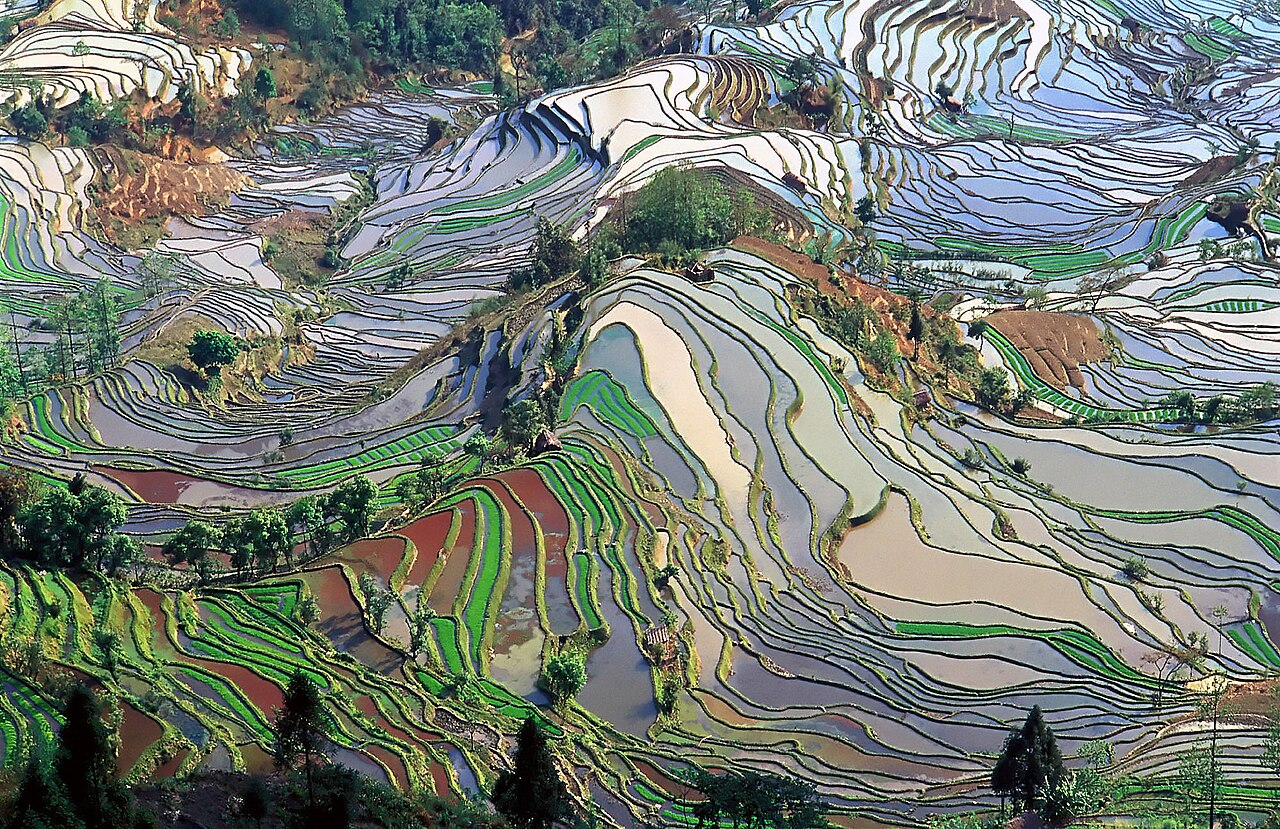
Yunnan, China
Rice-terrace mountains, old Naxi towns, snow peaks and the edge of Tibet.

India
The Taj Mahal, Rajasthan's forts and palaces, holy lakes and the green calm of Kerala.